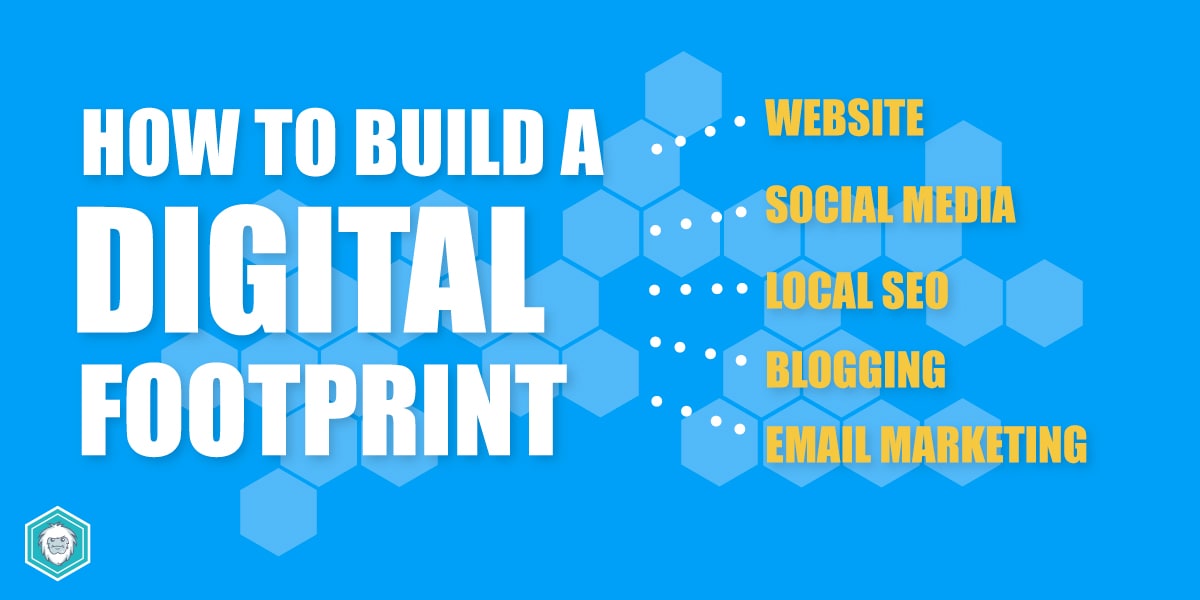
How to Build a Strong Digital Footprint to Grow Your Small Business
If your business appears in a few places online but those places do not quite match, your digital footprint may be working against you.
A lot of small businesses already have the pieces. The problem is that those pieces often exist separately. Your website says one thing, your social profiles say another, and your reviews or contact details may be out of date. That creates friction for potential customers.
That sounds more technical than it really is. In plain English, a strong digital footprint means people can find your business, understand what you do, and feel confident enough to contact or buy from you.
It is not about being on every platform. It is about making the important parts of your online presence work together so they support visibility, trust, and lead generation.
In this guide, you will learn how to audit your current online presence, choose the right platforms, improve your website, build trust signals, and create a simple path that turns online visibility into real enquiries.
Quick Answer: How Do You Build a Strong Digital Footprint?
To build a strong digital footprint for your small business, start by checking where your business already appears online. Then fix the basics: your contact details, website, branding, service information, reviews, and links between platforms.
The goal is to create a clear and consistent online presence that helps people find you, trust you, and take the next step.
- Audit where your business currently appears online.
- Fix outdated contact details, broken links, and inconsistent branding.
- Choose the platforms your customers actually use.
- Make your website the centre of your online presence.
- Add trust signals such as reviews, testimonials, photos, and clear policies.
- Use content, local SEO, social media, and email to support your main customer journey.
- Review your digital footprint regularly and improve one weak area at a time.
What Is a Digital Footprint for a Small Business?
A digital footprint is the collection of places your business appears online. This can include your website, Google Business Profile, social media accounts, review platforms, directory listings, blog posts, videos, email sign-up pages, and any other public mention of your business.
For a customer, your digital footprint creates an impression before they ever contact you. If your website looks clear, your reviews are recent, and your contact details match across platforms, your business feels more trustworthy.
If your profiles are outdated, your branding is inconsistent, or your website gives no clear next step, people may hesitate even if your service is good.
A strong digital footprint helps your small business look professional, findable, and credible across the places that matter most.
Why Your Digital Footprint Matters for Small Business Growth
Building a digital footprint is important because many customers now research a business before deciding whether to make contact, book a service, visit a shop, or buy a product.
Your online presence is often the first interaction someone has with your business. That means it needs to be clear, consistent, and useful.
- It helps people find you – A clear digital footprint makes your business easier to discover through search engines, social media, local listings, and referrals.
- It builds trust before contact – Reviews, testimonials, clear service pages, real photos, and consistent business information all help reduce doubt.
- It supports 24/7 visibility – A well-optimized website and complete online profiles allow people to learn about your business even when you are not available.
- It helps you compete with larger businesses – Small businesses can stand out by being clearer, more personal, and more relevant to their audience.
- It improves lead generation – When your online channels connect properly, more visitors can become enquiries, bookings, subscribers, or customers.
What You Need Before You Start
You do not need an advanced setup to improve your digital footprint. Start with the information and access you already have.
- Access to your website or website builder.
- A list of your main products, services, or offers.
- Your current business name, address, phone number, and email address.
- Links to your social profiles and directory listings.
- Access to your Google Business Profile if you have one.
- A simple spreadsheet or notes document.
- A rough idea of where your current enquiries usually come from.
How to Build a Strong Digital Footprint for Your Small Business
The best way to build your digital footprint is to start with what already exists, then improve the most important parts first.
Do not begin by creating more accounts, more content, or more campaigns. Begin by making your current online presence clearer and more consistent.
1. Audit Your Current Digital Footprint
The first step is to search for your business online and make a list of everywhere it appears.
Check your website, social profiles, Google Business Profile, review platforms, old directory listings, marketplace pages, and any other pages that mention your business.
Create a simple audit table with columns such as:
- Platform or website
- Purpose
- Current status
- Last updated
- Contact details correct?
- Branding consistent?
- Action needed
This audit helps you see what is working, what is missing, and what may be damaging trust.
For example, a local cleaner might have a website, a Facebook page, and a Google Business Profile. If the phone number is correct on two platforms but wrong on one, fixing that is an immediate win.
Common mistake to avoid: Do not jump straight into creating new content before checking the information that already exists online.
2. Choose Your Priority Platforms
You do not need to be everywhere. In fact, trying to manage too many platforms often leads to neglected profiles and inconsistent information.
Instead, divide your platforms into three groups:
- Essential platforms – Your website, Google Business Profile, main review platform, and one core social profile.
- Useful platforms – An email list, a second social platform, selected directory listings, or industry-specific platforms.
- Optional platforms – Extra channels you will only maintain if you have enough time, content, and a clear reason.
Your priority platforms should be the places your customers already use when searching, comparing, or deciding whether to trust a business like yours.
An accountant may focus on a website, Google Business Profile, LinkedIn, and client testimonials. A florist may focus on a website, Google Business Profile, Instagram, and seasonal landing pages.
If local search is important for your business, use a local SEO checklist for small businesses to make sure your main listings, location details, and review signals are supporting your footprint.
Common mistake to avoid: Do not choose platforms just because they are popular. Choose them because they help your customers find, trust, or contact you.
3. Make Your Website the Centre of Your Digital Footprint
Your website is usually the centre of your digital footprint because it is the place you control most.
Social media platforms can change. Directory listings can become outdated. Review platforms are useful, but they do not give you full control over your message. Your website gives your business a home base.
At a minimum, your website should clearly explain:
- Who you help
- What you offer
- Where you work or who you serve
- Why someone should trust you
- How to contact you
- What step to take next
Your website does not need to be complicated, but it does need to be clear.
Here are some important website basics to review:
- Choose a memorable domain name – Your domain name should be short, easy to spell, and relevant to your business. If possible, use your business name or a simple phrase connected to your service.
- Make sure your website works on mobile – Many customers will visit your website from a phone. Your pages should be easy to read, navigate, and use on smaller screens.
- Improve page speed and usability – A slow or confusing website can make people leave before they understand your offer.
- Create clear service pages – Important services should have their own pages instead of being hidden in one long homepage.
- Include key pages – Your website should usually include a homepage, About page, Contact page, service or product pages, testimonials, FAQs, and relevant policies.
- Use basic SEO – Clear page titles, headings, meta descriptions, internal links, and useful content help search engines understand your site.
If you want a stronger search foundation, start with this beginner-friendly SEO strategy guide.
Common mistake to avoid: Do not make your homepage do everything. Give your most important services, products, and offers their own space.
4. Strengthen Your Local Search Presence
If your small business serves a local area, local search should be one of the strongest parts of your digital footprint.
Local SEO helps your business appear when people search for services or products near them. This is especially important for businesses such as trades, cafes, salons, clinics, local shops, consultants, restaurants, and service providers.
Here are the local visibility basics to improve:
- Claim and update your Google Business Profile – Add your business name, address, phone number, website, opening hours, services, photos, and business description.
- Keep your contact details consistent – Your business name, address, phone number, and website should match across your website, listings, and profiles.
- Encourage customer reviews – Positive reviews help build trust and can support local visibility.
- Respond to reviews where appropriate – A polite response shows that your business is active and attentive.
- Create local service pages – If you serve multiple areas, useful location pages can help customers understand where you work.
- Add local content – Blog posts, FAQs, case studies, or guides connected to your area can support local relevance.
Common mistake to avoid: Do not ignore old listings. Outdated directory profiles with the wrong phone number, old opening hours, or broken links can create confusion.
5. Add Trust Signals Everywhere That Matters
People often decide whether to trust your business before they decide whether to contact you.
Trust signals are the visible clues that make your business look credible, active, and safe to deal with. These signals should appear across your website, profiles, listings, and lead paths.
Useful trust signals include:
- Recent customer reviews
- Testimonials
- Real photos of your work, team, product, or location
- Clear service descriptions
- Pricing guidance where appropriate
- Contact details
- FAQs
- Case studies or examples
- Secure website connection
- Clear response times or process notes
- Guarantees, policies, or terms where relevant
If reputation is currently a weak point, learning how to improve your small business reputation online can help you strengthen the review and trust side of your footprint.
Common mistake to avoid: Do not rely on vague claims like “high quality service” or “best in the area”. Show proof instead.
6. Use Social Media With Purpose
Social media can support your digital footprint, but it should not be the whole strategy.
The purpose of social media is to help people discover your business, understand your personality, see recent activity, and move toward a useful next step such as visiting your website, joining your email list, booking a call, or making an enquiry.
Here is how to use social media more effectively:
- Choose the right platforms – Focus on the platforms your audience actually uses.
- Keep your profile information updated – Your bio, contact details, website link, location, and offer should be accurate.
- Post consistently enough to look active – You do not need to post constantly, but abandoned profiles can reduce trust.
- Share useful content – Use posts to answer common questions, show examples, share customer stories, explain your process, and highlight offers.
- Engage with people – Reply to comments, messages, and mentions where appropriate.
- Link back to your website – Make sure social traffic has somewhere useful to go.
Related: Best Social Media Management Tools for Small Business
7. Create Helpful Content That Supports Your Services
Content can make your digital footprint stronger because it gives people more ways to find, understand, and trust your business.
This does not mean publishing random blog posts. The best content supports your services, answers customer questions, and helps people take the next step.
Blogging can help boost traffic to a small business website, but only when your content is useful and connected to what your audience needs.
- Beginner guides related to your service
- FAQs that answer common buying questions
- How-to articles
- Local guides
- Comparison posts
- Case studies
- Customer stories
- Service explainers
- Checklists
Related: Essential Tools for Content Creators and Bloggers to Build an Effective Online Presence
8. Create a Simple Lead Path
A strong digital footprint should not only make your business visible. It should help people take action.
A simple lead path connects your channels together.
- Your social profile should link to your website or a useful landing page.
- Your website should explain your offer clearly.
- Your service pages should include a clear call to action.
- Your blog posts should link to relevant services, guides, or resources.
- Your enquiry forms should be simple and easy to use.
- Your email sign-up should offer a reason to subscribe.
If your main goal is more enquiries, you can also explore practical ways to generate leads online so your content, offers, and calls to action work together.
9. Use Email Marketing to Stay Connected
Email marketing can strengthen your digital footprint because it gives you a way to keep in touch with people after they leave your website or social profile.
Not everyone is ready to buy the first time they find your business. An email list lets you build trust over time through useful updates, offers, reminders, and educational content.
Email marketing is especially useful for businesses that rely on repeat customers, seasonal promotions, launches, appointments, digital products, or long decision-making cycles.
- Offer a reason to subscribe – This could be a discount, checklist, guide, template, early access, or useful newsletter.
- Keep your sign-up form simple – Ask only for the information you need.
- Segment your list where useful – Different customers may need different messages.
- Send helpful content – Mix useful advice, updates, offers, and reminders.
- Use automation carefully – Welcome emails, follow-ups, and abandoned cart reminders can save time.
Related: Best Email Marketing Software
Practical Tips for Improving Your Digital Footprint
- Keep your business name, address, phone number, and website link consistent across platforms.
- Update one weak platform before creating three new ones.
- Use recent photos and recent reviews where possible.
- Make sure every key platform links to the right page.
- Check your calls to action on mobile as well as desktop.
- Remove or update old profiles that no longer represent your business.
- Use the same core service wording across your website, profiles, and listings.
- Review your main search results for your business name every month.
Common Digital Footprint Mistakes to Avoid
- Spreading your business across too many platforms and updating none of them well.
- Leaving old contact details or broken links live for months.
- Writing vague website copy that never clearly says what you do.
- Ignoring reviews or failing to ask happy customers for them.
- Treating social media as the whole strategy instead of one part of it.
- Sending visitors to pages with no clear next step.
- Using different descriptions of your services on every platform.
- Creating content that does not support your products, services, or customer questions.
Digital Footprint Checklist for Small Businesses
- My website clearly explains what I do and who I help.
- My contact details match across all key platforms.
- I have chosen my essential platforms.
- My Google Business Profile or main local profile is complete.
- My main services have their own pages.
- I have at least one clear call to action on each key page.
- My reviews or testimonials are visible.
- My branding and tone feel consistent.
- My social profiles link back to my website.
- My website links to useful next steps.
- My old listings are updated or removed where possible.
- I review and update my digital footprint monthly.
Summing Up
A strong digital footprint is not about doing more. It is about making the important pieces of your online presence work together.
Start with one clear next step. Audit what already exists, fix what is inconsistent, and choose the platforms that actually support your business goals.
From there, improve your website, strengthen your local visibility, add trust signals, use social media with purpose, and create a simple lead path that helps people move from discovery to enquiry.
You can make your digital footprint more advanced later. For now, focus on clarity, consistency, and trust.
A strong digital footprint helps your small business look more professional today and creates a better foundation for long-term online growth.
If you want your website pages to work harder as part of that footprint, a natural next step is this beginner’s guide to on-page SEO for small businesses.
FAQs About Building a Digital Footprint
What is a digital footprint for a business?
A digital footprint is the collection of places your business appears online. This includes your website, social media profiles, business listings, reviews, blog content, videos, and any other pages people may find when researching your business.
Do I need to be on every social media platform?
No. Most small businesses do better when they focus on a few important channels and keep them updated.
Is a website still important if I use social media?
Yes. Social media can help people discover your business, but your website gives you more control and usually does a better job of explaining your offer.
How often should I review my digital footprint?
A monthly review is a good starting point for most small businesses. Check your contact details, broken links, reviews, profile information, website calls to action, and outdated content.
What trust signals matter most?
The most useful trust signals are usually clear contact details, recent reviews, testimonials, real photos, service pages, FAQs, and honest information about how your business works.
Can beginners build a strong digital footprint without hiring an expert?
Yes. Many improvements are simple and practical. Updating contact details, improving service pages, adding reviews, fixing broken links, choosing priority platforms, and creating clearer calls to action are all manageable first steps.