Website Traffic vs Leads: What Small Businesses Should Prioritise
If you have been working on your website for a while, you have probably asked some version of this question: should I focus on getting more traffic, or should I focus on getting more leads?
It is a fair question. A lot of business owners see website visits going up and assume that means things are working. Then they look at enquiries, bookings or sales and realise the numbers do not match. That can feel frustrating, especially if you have been putting real time and money into SEO, content or ads.
The good news is that this is usually simpler than it sounds.
Website traffic matters, but traffic on its own does not pay the bills. Leads are usually the more useful priority, especially when your time, budget and attention are limited.
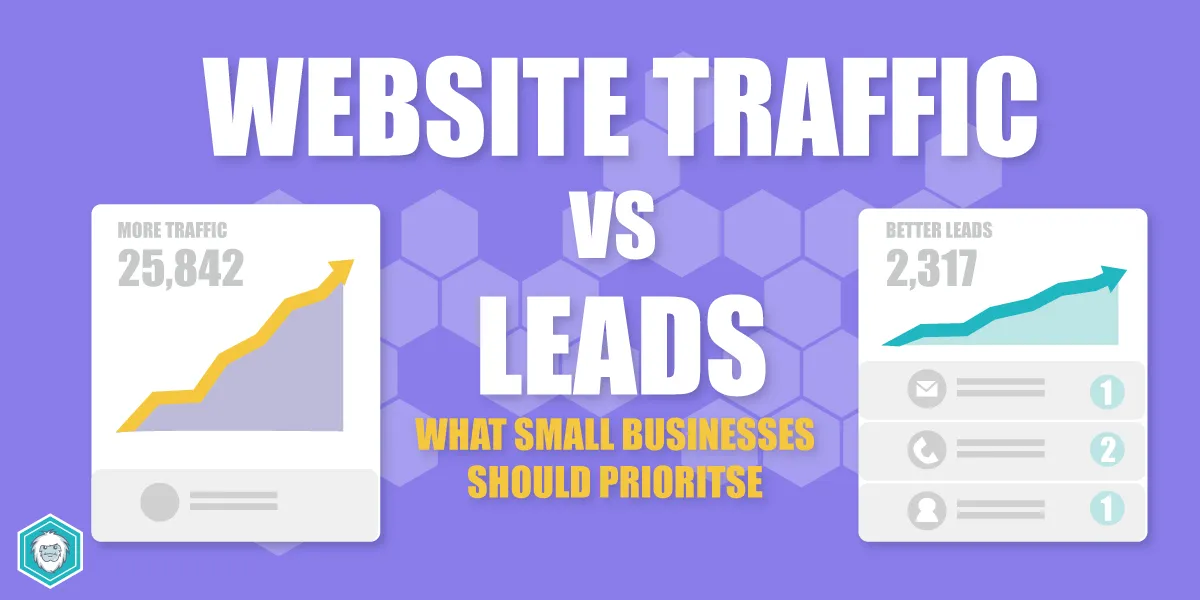
In this guide, you will learn the difference between traffic and leads, when each one matters, how to avoid vanity metrics, and how to make better decisions with the numbers you already have. If you are new to online marketing then this is a good place to start.
Quick Answer: Traffic or Leads?
If you run a service business, consultancy, local business or newer online brand, leads usually matter more than raw traffic.
In plain English:
Traffic tells you how many people visited. Leads tell you how many people showed enough interest to take the next step.
That next step might be filling in a contact form, booking a call, asking for a quote, joining your email list or starting a checkout.
The goal is not to build the fanciest website or attract the biggest audience. It is to build a clear path from visitor to action.
That does not mean traffic is unimportant. It means traffic should support the outcome, not become the outcome.
Key Takeaways
- Traffic is useful, but leads are usually a better sign that your website is helping your business.
- A smaller number of relevant visitors can outperform a large number of unqualified ones.
- Vanity metrics can make progress look better than it really is.
- Most businesses should improve conversion paths before chasing more website visits.
- Good measurement starts with a simple definition of what counts as a lead.
- Small, consistent improvements usually beat complicated plans that never get implemented.
What Website Traffic vs Leads Actually Means in Plain English
Website traffic is the number of people visiting your site. Leads are the people who take a meaningful next step.
That sounds more technical than it really is. Think of traffic as footfall outside a shop. Leads are the people who come inside, ask a question and show real buying intent.
If you only track traffic, you may end up feeling pleased about numbers that do not actually move the business forward. A blog post might get hundreds of visits, but if none of those visitors are a fit for what you sell, the traffic is not especially valuable.
On the other hand, a service page with lower traffic might generate five good enquiries each month. For many businesses, that page is doing far more useful work.
A lot of businesses already have the pieces. The problem is that they often exist separately. One page brings traffic, another page explains the service, and a separate contact process collects the lead. If the journey between those pieces feels unclear, visitors often drop off.
Why Leads Usually Deserve More Attention
For most smaller businesses, leads are closer to revenue than traffic is. That makes them the better short-term priority.
A local electrician does not need ten thousand monthly visitors if twenty of the right people become quote requests. A freelance copywriter does not need a viral blog post if a steady handful of good-fit enquiries come through the website every month.
Leads also tell you more about quality. If traffic is rising but leads stay flat, one of a few things is probably happening:
- The wrong people are landing on the site
- The offer is unclear
- The call to action is weak
- The page is hard to trust
- The next step feels confusing or too much effort
If the reader has to work too hard, something is wrong. A website should not make people guess what to do next.
For more context, see our guide to the marketing funnel, which explains how visitors move from awareness to enquiry or sale.
When Traffic Should Still Be a Priority
Traffic is not a vanity metric in every situation. Sometimes it is the right thing to focus on.
When you are getting almost no visitors
If hardly anyone is finding your website, conversion tweaks alone will not solve the problem. You need enough relevant visitors for the site to have a chance to work.
When you are building awareness first
A blogger, online store or newer brand may need more reach before leads or sales become consistent. In that case, traffic helps fill the top of the funnel.
When you are testing a new offer
You may need more visits before you can tell whether a page or offer converts well.
When the traffic is highly relevant
Targeted traffic from local search, referral links, helpful blog posts or focused ads can be very valuable. The issue is not traffic itself. The issue is treating all traffic as equally useful.
A Simple Framework: What to Prioritise First
Use this quick framework to decide whether your next effort should go into traffic or lead generation.
| If this is true | Prioritise this |
|---|---|
| You get visitors but very few enquiries | Leads and conversion improvements |
| Your pages are barely getting seen | Traffic and visibility |
| You get the wrong type of enquiries | Better messaging and targeting |
| You have strong traffic on blog posts but weak service enquiries | Internal links, calls to action and service page journeys |
| You rely heavily on word of mouth and want steadier leads | Conversion-focused website improvements first |
| You want faster results and have some budget | Test clear landing pages and compare SEO vs Google Ads as a practical channel decision |
The goal is not to choose one forever. It is to choose the next bottleneck.
Step 1: Define What Counts as a Lead
Before you measure anything, decide what a lead actually means for your business.
For a local café, a lead might be an event enquiry. For an accountant, it might be a consultation request. For an online store, it could be an email signup, a cart start or a product enquiry.
Keep it simple. Choose one primary lead action and one or two secondary ones.
A common mistake is tracking everything and understanding nothing. Start with one clear next step.
Step 2: Check Whether the Right People Are Visiting
Not all traffic is equal. One hundred visitors who need what you offer are worth more than one thousand who do not.
Look at where visitors are landing, what pages they read and whether those pages match your services or products. If a florist gets traffic for general flower facts but no wedding booking enquiries, there may be a mismatch between traffic and business goal.
You do not need perfect analytics to improve this. Even basic patterns can tell you a lot.
You can use website Analtyics tools like Google Analytics to achieve this.
Step 3: Fix the Conversion Path Before Chasing More Clicks
Once relevant visitors arrive, the next question is simple: is the path to action obvious?
Check the basics:
- Does the page explain what you do quickly?
- Is there a clear call to action?
- Is the contact option easy to find?
- Does the page build trust with examples, reviews or useful details?
- Does the message match what the visitor expected to see?
A web designer, for example, might have decent traffic from SEO but still lose leads if the homepage is vague, the pricing feels hidden and the enquiry form asks for too much too soon.
Step 4: Increase Traffic Once the Website Can Convert
If your pages are reasonably clear and you still need more opportunities, that is the time to work harder on traffic.
That might mean:
- Publishing helpful articles around customer questions
- Improving service page SEO
- Refreshing page titles and descriptions
- Building local visibility
- Testing focused paid ads
- Improving internal links between blog content and money pages
Traffic works best when the site is ready to catch it.
Small Business Examples
Local electrician
An electrician gets only 300 visits a month, but most are from nearby search terms, and the service pages are clear. In that case, improving trust signals and making quote requests easier may help more than chasing a big traffic jump.
Freelance copywriter
A copywriter has a blog post bringing steady traffic, but visitors rarely move to the services page. A stronger internal link, a relevant call to action and a simpler service offer could improve leads without needing more visitors.
Small skincare brand
An online brand may need both. Product pages need better conversion, but the brand also needs broader discovery through search, content or social traffic. Here, the priority may be split, but sales-focused pages should still be improved early.
Accountant
An accountant might get modest traffic yet win strong leads from a clear tax return landing page. That page matters more than a blog post with high views but no commercial intent.
Common Mistakes to Avoid
Celebrating traffic with no business outcome
High page views can feel encouraging, but they do not automatically mean the strategy is working. Always ask what happened next.
Targeting broad keywords too early
Broad traffic often brings low-fit visitors. Start with clear, specific pages that match real services or offers.
Hiding the next step
Do not make visitors hunt for your form, booking link or contact details. If the next step is unclear, fewer people will take it.
Treating every page the same
A blog post and a service page do different jobs. Measure them accordingly.
Ignoring lead quality
Ten weak leads are not always better than three strong ones. Track whether enquiries are relevant, not just whether they happened.
Jumping into ads before the site is ready
Paid traffic can expose weak pages very quickly. Fix clarity and calls to action first, where possible.
Website Traffic vs Leads Checklist
- Define one primary lead action for your website.
- Choose one or two secondary lead actions.
- Check which pages currently bring the most relevant visitors.
- Review whether those pages clearly point to the next step.
- Make sure each important page has one obvious call to action.
- Remove unnecessary form fields or friction where possible.
- Add trust signals such as testimonials, examples or FAQs.
- Link high-traffic blog posts to relevant service or offer pages.
- Compare traffic quality, not just traffic volume.
- Review lead quality once a month.
- Improve one weak page before launching a bigger traffic push.
- Keep your reporting focused on outcomes, not vanity metrics.
Practical Tips for Measuring the Right Metrics
If you are not sure what to track, start with a short list:
- Total leads per month
- Lead source where possible
- Conversion rate on key pages
- Top landing pages
- Contact form completion rate
- Bookings, quote requests or email signups
You do not need a complex dashboard. A simple spreadsheet can be enough at first.
Final Thoughts
When it comes to website traffic vs leads, most businesses should prioritise leads first.
Traffic still matters, but only if it supports the right outcome. A smaller number of relevant visitors and a clearer next step will usually do more for your business than a big spike in page views.
You do not need to fix everything this week. Pick one important page, define one lead goal and improve one conversion step. That is often enough to start seeing clearer signals.
FAQs
Is website traffic a vanity metric?
Not always. Traffic becomes a vanity metric when it is treated as proof of success without any connection to enquiries, sales or useful business outcomes.Relevant traffic still matters. The key is to connect it to what happens next.
Should a new website focus on traffic first?
Usually, yes, at least to some extent. A new website needs enough visibility for anyone to find it. But even early on, it still helps to make sure the site has a clear offer and a clear next step. Otherwise you may attract visitors without learning much from them.
What counts as a lead for a small business website?
That depends on the business model. It could be a contact form submission, a quote request, a booked call, an email signup or a product enquiry.Choose the action that most clearly shows buying interest and track that first.
Can low traffic still produce good results?
Yes. Low traffic can still work well if the visitors are highly relevant and the page is clear. Many businesses do not need huge traffic numbers. They need the right people landing on the right page and taking the right action.
How do I know if my website has a traffic problem or a conversion problem?
If relevant people are visiting but not contacting you, it is likely a conversion problem. If hardly anyone is visiting at all, it is more likely a visibility or traffic problem. In reality, some businesses have a bit of both. Start by identifying the biggest bottleneck.
Should I focus on SEO or Google Ads for leads?
That depends on timing, budget and competition. SEO can build longer-term visibility, while Google Ads can produce quicker testing opportunities.If your website is not clear or conversion-ready yet, neither channel will perform as well as it could. Fix the basics first, then choose the traffic source that fits your goals.